Tianchu Zeng

曾天楚

PhD candidate in Electrical & Computer Engineering, National University of Singapore

My research combines computational neuroscience and AI for science. I develop deep-learning methods that make brain modeling faster, statistical methods for evaluating machine-learning models, and AI-agent workflows for scientific research.

  • AdvisorsProf. BT Thomas Yeo · Prof. Thomas E. Nichols
  • PreviouslyDepartment of Automation, Tsinghua University
  • NextI expect to complete my PhD in 2027 and am seeking industry roles or postdoctoral positions in AI and neuroscience, particularly AI for science and computational neuroscience. Very welcome to get in touch to discuss opportunities or potential collaborations!
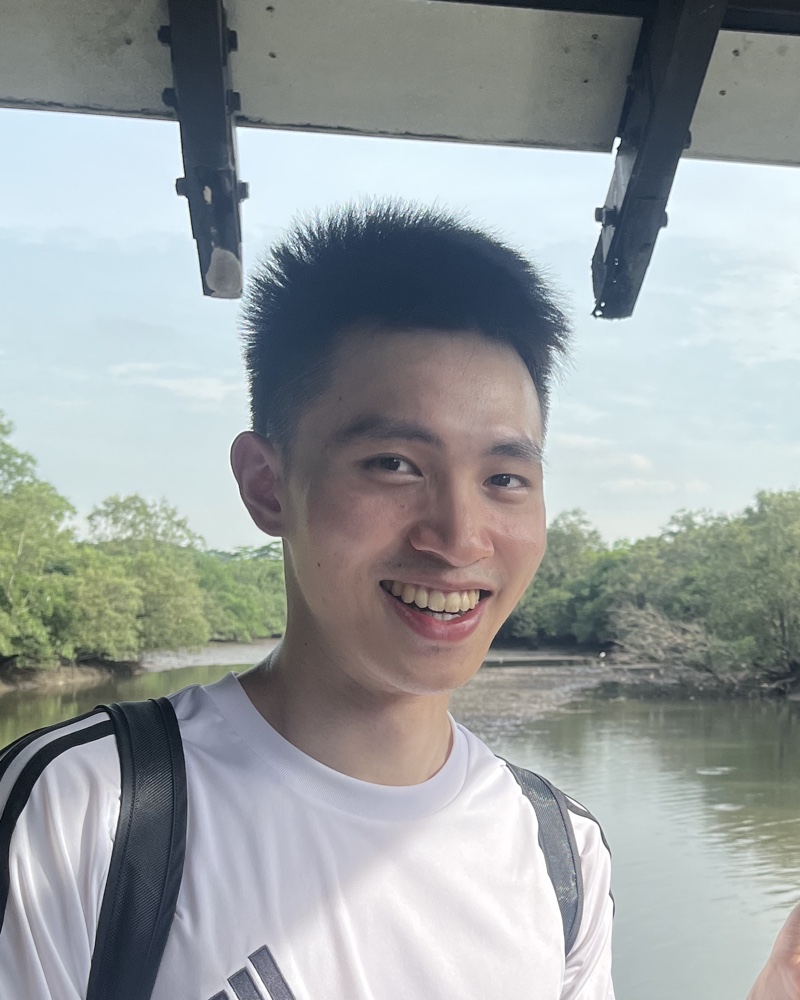
Portrait of Tianchu Zeng

Recent

News

  • Sep 2026 Coauthored study linking excitation–inhibition imbalance, amyloid pathology, and cognition — accepted for publication in Alzheimer’s & Dementia.
  • Sep 2026 Major revision posted of the SHARP preprint (bioRxiv) — new title, a broader survey of the literature, and a re-analysis of what those studies claimed.
  • Aug 2026 Invited Nature Methods Research Briefing accompanying the paper — accepted for publication.
  • Jul 2026 Co-first-author DELSSOME study on deep learning for biophysical brain-model fitting — accepted for publication in Nature Methods.
  • May 2026 Co-first-author preprint posted: Spurious model comparisons are widespread in biomedical artificial intelligence (bioRxiv).
  • Apr 2026 Best Poster Award, Basic Science — NUHS Scientific and Innovation Summit, Singapore.
  • Jul 2025 Invited talk at the Asia-Pacific Computational and Cognitive Neuroscience Conference (AP-CCN), RIKEN, Japan.

Background

About

I am a PhD candidate in Electrical & Computer Engineering at the National University of Singapore, advised by Prof. BT Thomas Yeo and co-advised by Prof. Thomas E. Nichols at the University of Oxford. I work on scalable brain modeling and statistically valid evaluation of biomedical AI, alongside brain foundation models and scientific software.

Before NUS, I studied in the Department of Automation at Tsinghua University, with training in signals and systems, control, machine learning, and computing. My research with Prof. Jianming Hu and Prof. Yi Zhang on multi-agent traffic trajectory prediction led to two co-first-authored conference papers and a granted patent. I also worked on electroencephalography (EEG) analysis and DNA data encryption. I enjoy turning mathematical ideas into computational tools that other researchers can use and build on.

What I work on

Selected Work

I develop methods for fitting brain models at population scale and evaluating machine learning with statistically sound comparisons. These projects connect methodological advances with scientific questions about the brain.

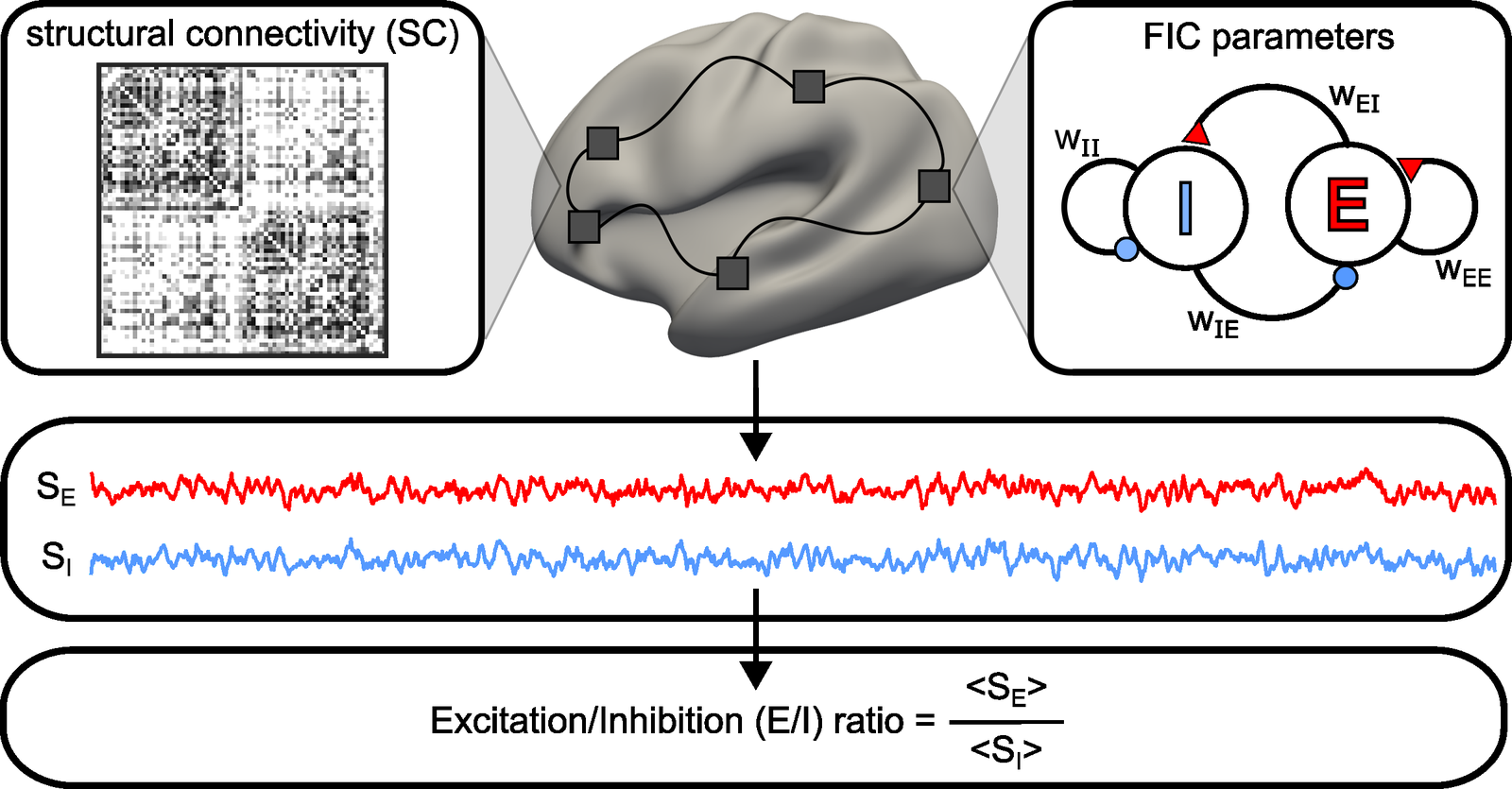
Figure: schematic of the feedback inhibition control mean field model — a structural connectivity matrix and regional FIC parameters feed a cortical surface model that generates excitatory and inhibitory synaptic time courses, whose ratio gives the excitation/inhibition ratio

Nature Methods 2026 Accepted for publication

Optimizing biophysical large-scale brain circuit models with deep neural networks

Biophysical brain models describe how interacting populations of neurons produce brain activity. Fitting these models to data usually requires repeatedly solving differential equations, making studies of thousands of individuals computationally expensive.

I developed DELSSOME, a deep-learning framework for fitting biophysical brain models. It predicts how well candidate parameters fit observed connectivity data, evaluating each candidate 1,500–⁠8,000× faster than numerical simulation. Overall, it accelerates fitting by 50–⁠100× across three model families while preserving fitting accuracy in our experiments.

I co-led analyses of 12,005 participants across 14 datasets, mapping lifespan changes in model-derived cortical excitation–inhibition (E/I) ratio: a decline through development and adulthood followed by a late-life increase. We also identified sex differences and a persistent gradient between sensory and association cortex.
Preprint (bioRxiv) DELSSOME on GitHub

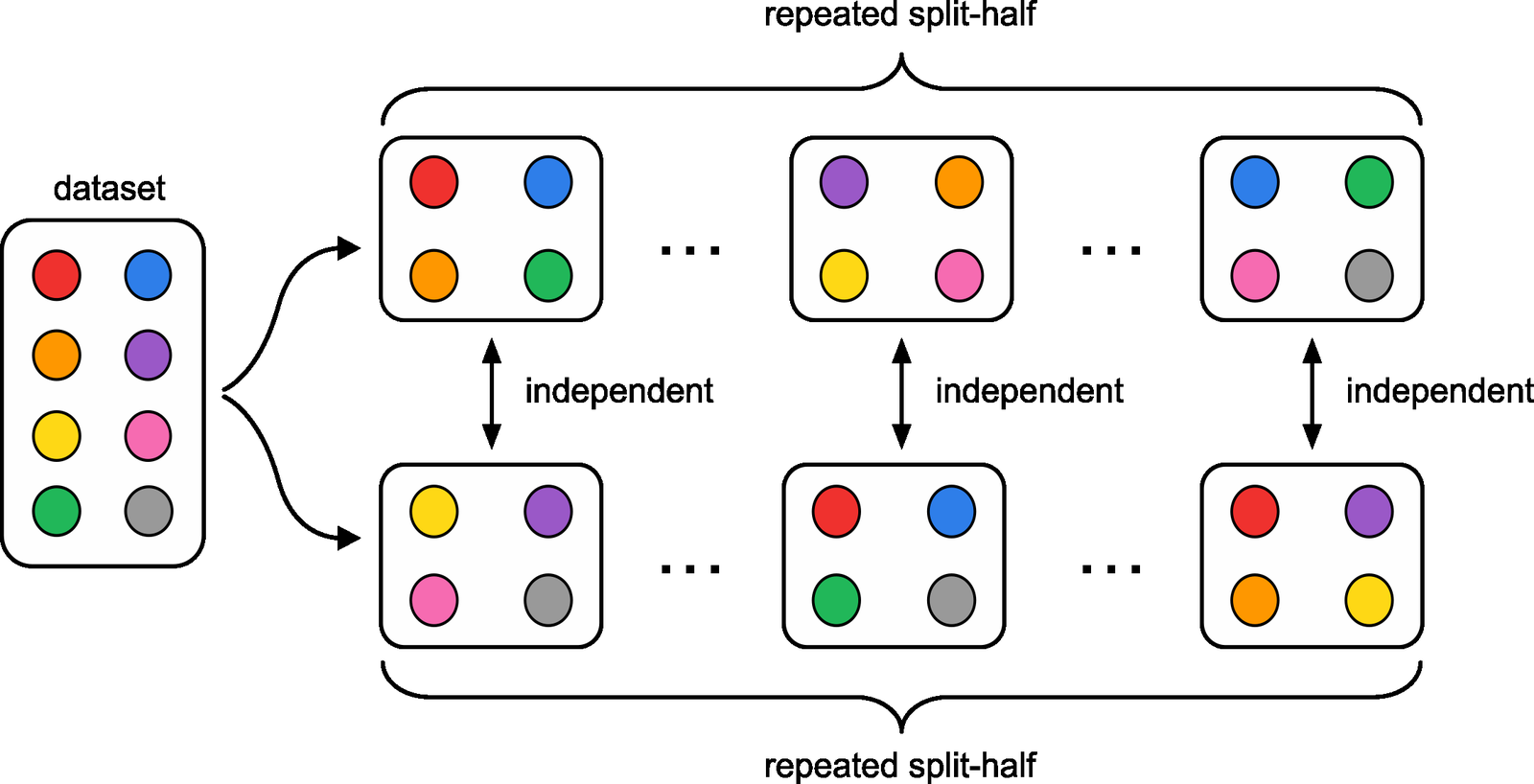
Figure: diagram of the SHARP procedure — a dataset is repeatedly split into two independent halves, producing pairs of independent training and test sets across many repetitions

bioRxiv preprint 2026

Spurious model comparisons are widespread in biomedical artificial intelligence

Cross-validation reuses data across training and testing splits, creating correlations that common statistical tests can overlook. This can make apparent performance improvements look more convincing than the evidence supports.

I co-developed SHARP, a statistical method that redesigns cross-validation to estimate variance and correlation and test whether model performance differences are supported by the data. Across 420 simulation scenarios, it achieved the best balance of false-positive control and statistical power among 13 tests.

I co-led a review of 184 biomedical AI studies across 30 fields; 97% used tests that ignored between-fold correlation. Among re-analyzed studies whose abstract claims relied on invalid tests, 59% had at least one supporting comparison lose statistical significance after accounting for this correlation.

Read the preprint sharp-cv on GitHub

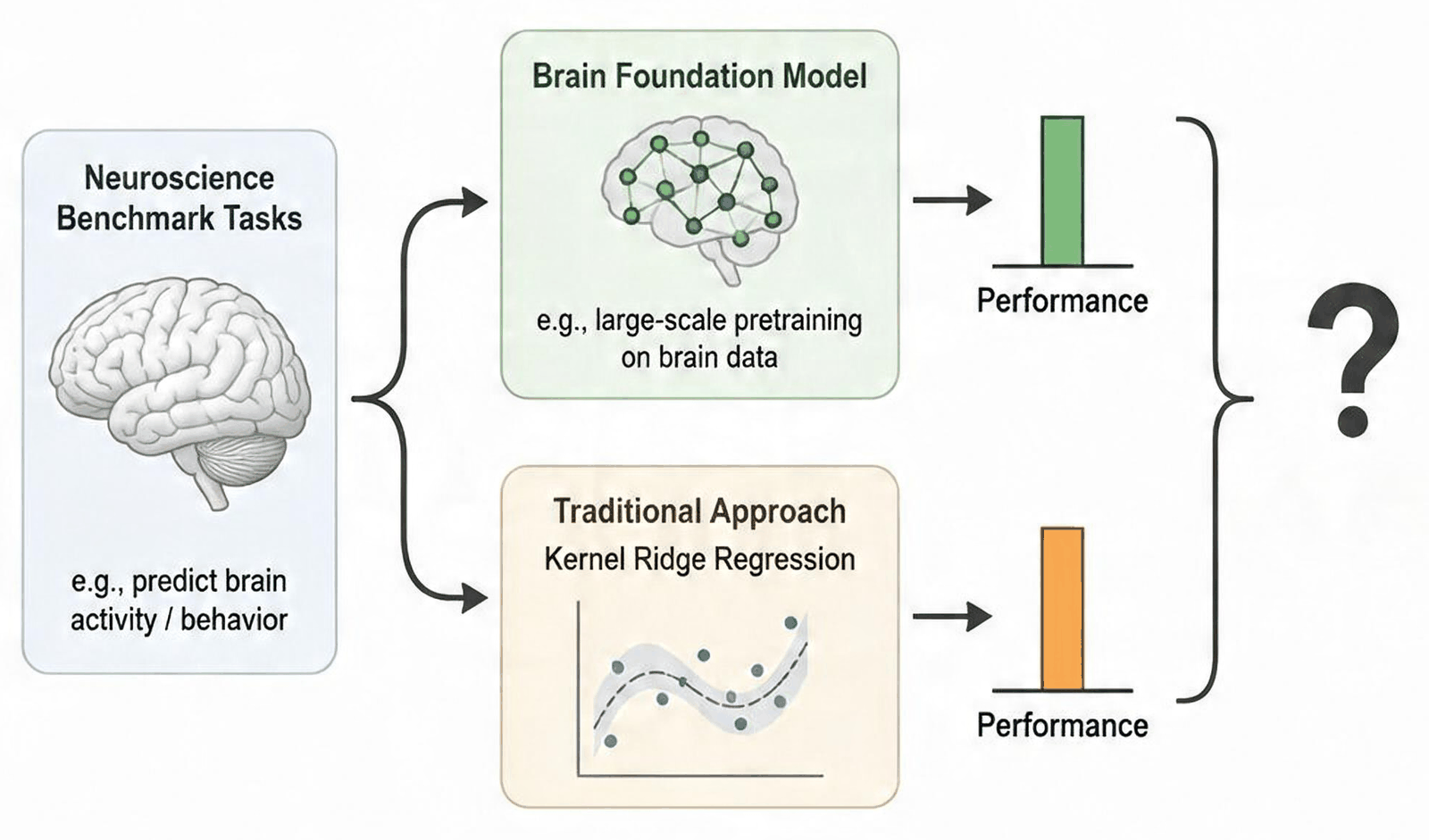
Figure: neuroscience benchmark tasks are fed both to a brain foundation model pretrained on large-scale brain data and to kernel ridge regression, and their prediction performance is compared

Ongoing Manuscript in preparation

Building and evaluating brain foundation models

Brain foundation models are pretrained on large brain datasets for adaptation to downstream tasks. I build and fine-tune these models and benchmark phenotypic prediction: predicting individual traits from brain data.

We compare different foundation models with carefully tuned classical machine-learning methods, including kernel ridge regression, to understand when pretraining improves prediction.

Full record

Publications

Published and accepted work, preprints, and manuscripts in preparation. Publisher and preprint links are provided where available.

Journal publications

  1. Zeng, T.*, Tian, F.*, Zhang, S., Li, X., Tan, A. P., Larsen, B., … Yeo, B. T. T., & Alzheimer’s Disease Neuroimaging Initiative (2026). Optimizing biophysical large-scale brain circuit models with deep neural networks. Nature Methods. Accepted for publication · bioRxiv preprint
  2. Zeng, T., & Yeo, B. T. T. (2026). Deep learning charts the excitation–inhibition balance of the brain throughout the lifespan. Nature Methods. Accepted · Invited Research Briefing accompanying (1).
  3. Zhang, S.*, Roemer-Cassiano, S. N.*, Chong, J. R.*, …, Zeng, T., …, Alzheimer’s Disease Neuroimaging Initiative, Lai, M. K. P.+, Franzmeier, N.+, & Yeo, B. T. T.+ (2026). Excitation–inhibition imbalance links amyloid pathophysiology to cognition in non-demented individuals. Alzheimer’s & Dementia. Accepted for publication
  4. Qu, Y. L., Chen, J., Tam, A., Ooi, L. Q. R., Dhamala, E., Cocuzza, C. V., Zhang, S., Zeng, T., … & Holmes, A. J. (2025). Distinct brain network features predict internalizing and externalizing traits in children, adolescents and adults. Nature Mental Health, 3(3), 306–317.
  5. Zhang, S.*, Larsen, B.*, Sydnor, V. J.*, Zeng, T., An, L., Yan, X., …, Satterthwaite, T. D.+, & Yeo, B. T. T.+ (2024). In vivo whole-cortex marker of excitation-inhibition ratio indexes cortical maturation and cognitive ability in youth. Proceedings of the National Academy of Sciences, 121(23), e2318641121.

Preprints and manuscripts

  1. Zeng, T.*, Li, H.*, Zhang, S.*, Tan, Y. Q., Tian, F., Orban, C., …, Nichols, T. E.+, & Yeo, B. T. T.+ (2026). Spurious model comparisons are widespread in biomedical artificial intelligence. bioRxiv preprint.
  2. Ling, Z., Dong, Z., Zeng, T., Lin, Y., Li, R., Che, W., Zhang, C., Holmes, A., An, L., Zhang, S., Zhou, J. H., & Yeo, B. T. T. (2026). Do Brain Foundation Models Perform Better in Phenotypic Prediction than Classical Models? In preparation

Peer-reviewed conference proceedings

  1. Gui, N.*, Zeng, T.*, Hu, J., & Zhang, Y. (2022). Visual-Angle Attention Predictor: A multi-agent trajectory predictor based on variational auto-encoder. 22nd COTA International Conference of Transportation Professionals (CICTP 2022), Changsha, China, 866–877.
  2. Zeng, T.*, Gui, N.*, Hu, J., & Zhang, Y. (2022). Agents-Separated Prediction-Former: A novel multi-agent trajectory prediction model based on Transformer with 2D input. 22nd ASCE International Conference on Transportation and Development (ICTD 2022), Seattle, USA, 180–191.

* Equal contribution / co-first author.  + Co-corresponding author.

Speaking and service

Talks, awards and teaching

Invited talks

  • Optimizing biophysical large-scale brain circuit models Asia-Pacific Computational and Cognitive Neuroscience Conference (AP-CCN 2025), RIKEN, Japan · Invited talk

Conference presentations and posters

  • Optimizing biophysical large-scale brain circuit models with deep neural networks
    • Organization for Human Brain Mapping (OHBM 2026) — Bordeaux, France
    • NUHS Scientific and Innovation Summit 2026 — Singapore Best Poster · Basic Science
    • AI4X 2025 — National University of Singapore

Awards

  • Best Poster Award, Basic Science NUHS Scientific and Innovation Summit, Singapore · 2026
  • NUS Research Scholarship National University of Singapore · 2022–2026

Teaching

  • EE2026 Digital Design Teaching Assistant · National University of Singapore
  • EE3731C Signal Processing Teaching Assistant · National University of Singapore

Building in the open

Open Source

I develop and maintain scientific software and AI-agent tools, with an emphasis on reproducible analyses, source-referenced outputs, and practical workflows.

Scientific software Python · PyTorch MIT Lead developer

DELSSOME

I lead development and maintenance of the official implementation for the Nature Methods study. It fits biophysical brain models to functional connectivity and functional connectivity dynamics, estimates model-derived cortical excitation–inhibition ratios, and validates fitted parameters through numerical simulation.

The repository includes individual- and group-level pipelines, pretrained models, lifespan-analysis tools, runnable examples, documentation, and regression tests.

github.com/TianCZeng/DELSSOME

Scientific software Python · scikit-learn MIT Lead developer

sharp-cv

I developed and publicly released the SHARP Python package for statistical model comparison under cross-validation. It implements the redesigned procedure from our preprint and works with scikit-learn estimators.

Results include the statistical test and the performance differences from each repetition, making the comparison inspectable. Installation instructions and usage details are in the repository.

github.com/TianCZeng/sharp-cv

AI agents Research tooling Sole developer Release in preparation

SHARP meta-analysis agent workflow

I independently developed an AI-agent workflow based on SHARP’s meta-analysis procedures to extract evidence and support reproducible statistical re-analysis of published model comparisons.

It produces source-referenced reports, records analysis inputs and outputs, and includes automated checks of evidence references and statistical results, plus selective second-agent review. I am preparing it for public release.

Lab codebase MATLAB · Python MIT Contributor

ThomasYeoLab/CBIG

I contribute code, pull-request reviews, and maintenance to CBIG, an open-source neuroimaging software repository.

I authored and maintain its DELSSOME project, with tests, replication scripts, and documentation to support reproducible research.

github.com/ThomasYeoLab/CBIG

AI agents Node.js MIT Creator

admissions-ops

I created an AI-agent workspace for graduate-application planning. It helps applicants assess programs against official requirements and their own evidence, producing source-referenced reports, eligibility checks, tailored CVs, and statement drafts.

Automated validators check source references, structured records, and consistency of generated documents. Missing evidence becomes a verification task, and drafts require human review. Workspace files are stored locally.

github.com/TianCZeng/admissions-ops

AI agents 70k+ stars Contributor

career-ops

An open-source AI job-search workspace that runs inside a local coding agent — scan listings, score them against your profile, tailor a CV, track applications. I contribute to the project. Its local-first, plain-files design is also what admissions-ops grew out of.

github.com/career-ops-hq/career-ops

More repositories are in progress — mostly teardowns and reimplementations of systems I want to understand properly, written up as I go. Issues and pull requests are welcome on anything here.

Outside the lab

Beyond Research

Research is a big part of my life, but it is not the whole story. Outside the lab, I enjoy sports, hiking, swimming, and exploring imaginative worlds through games and stories.

Sports

I play table tennis, badminton, and basketball. Table tennis has been a particularly important part of my life: I hold China's National Level II Athlete designation in table tennis. I enjoy the combination of quick decisions, movement, technique, and the friendly competitiveness that makes a good game memorable.

I also love hiking and swimming. Hiking gives me time to slow down, explore new places, and notice details that are easy to miss during a busy week. Swimming is one of my favourite ways to reset and keep moving.

Lord of Mysteries and Whackamon

I am a big fan of Lord of Mysteries. That interest eventually led me to build Whackamon, a free browser mini-game made for the simple pleasure of shipping something small and entertaining for other people. It has since collected thousands of visits and likes, which has been both surprising and genuinely fun to watch.

Whackamon logo: a small dark crow wearing a gold monocle, perched on an ornate golden branch beside the game's gold lettering

Browser game TypeScript · React · Phaser Free to play

A bilingual (English / 中文) whack-a-mole game with seven progression levels, dynamic difficulty, achievements, and saved progress. Built with React and Phaser, with mobile packaging through Capacitor.

By my own entirely rigorous evaluation it is the best whack-a-mole-style game in the world. Sample size: one. Statistical test: the invalid kind. You can see why I ended up working on that problem.

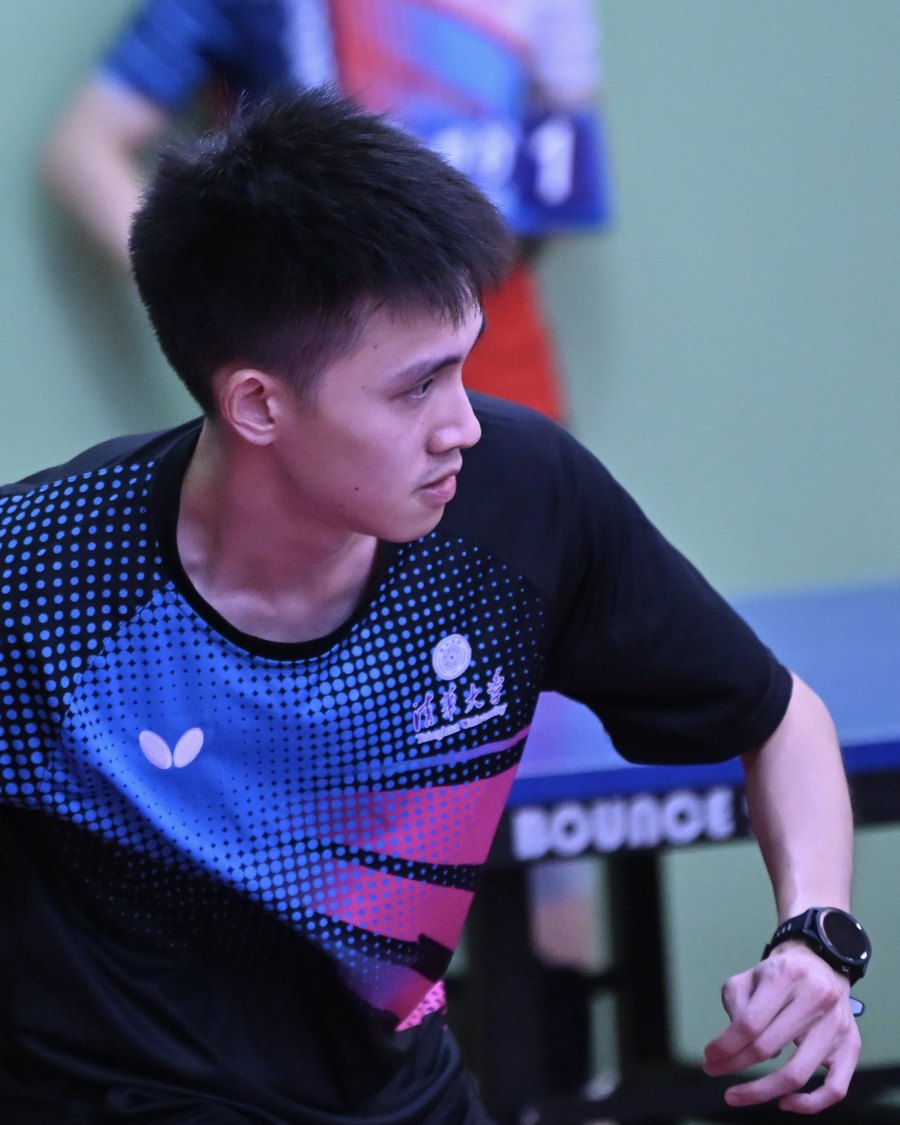
Tianchu Zeng playing table tennis during a match
Away from the desk.

Get in touch

CV & Contact

I welcome conversations about AI, brain imaging, computational neuroscience, statistical methodology, scientific software, and research collaboration. I am also happy to hear from people interested in the ideas or projects shared on this site.

CV
Academic CV (PDF)
Email
tianchuzeng@gmail.com
LinkedIn
tianchu-zeng-31a16926a
Scholar
Google Scholar profile
ORCID
0009-0009-0773-4502
GitHub
TianCZeng
Twitter / X
@tianchuzeng
Location
Singapore